

Patient Safety, Rights & Responsibilities
Patient Safety
Your safety is our top priority. We've implemented the following measures to ensure your well-being during your stay:
Identification & Verification:
-
Please wear your hospital ID Band at all times and verify that your name and Unique ID number (UHID) are correct. -
Our staff will check your ID Band before any procedure, test or medication is administered to ensure you receive the right care every time.
Electrical Safety:
-
For your safety, we request that you avoid bringing personal electrical appliances such as toasters, water heaters, or electrical ovens into patient rooms. -
This helps us maintain a safe environment for everyone.

Mobility & Assistance:
-
We encourage attenders to accompany patients to provide additional support and ensure safety. -
Please use the call bell whenever you need assistance from our nursing staff—we're here to help!
For your convenience and safety, we've equipped rooms and facilities with:
-
Handrails on beds. -
Footstools for easy access -
Grab bars in restrooms -
Safety belts on stretchers and wheelchairs

Prevention of infection
Many healthcare institutions around the world face the problem of prevention of infection. At SMF, we have regular training on preventing infection for our doctors and paramedics. This helps us battle infections and safeguard patients.

Medical safety
Our responsibility as caregivers is something we take very seriously to ensure that right medications are administered and on time. Our system of checks and counterbalances enhances efficiency and transparency to ensure medications are safely dispensed.
Measures adopted by SMF for patient safety
-
Patients must constantly wear their hospital ID Bands and ensure that the patient name and medical record number (UHID number) are correct. SMF staff members will regularly check the patient’s ID Band before any procedure, or test is performed or dispensing medicine, to ensure the right procedural care is given. -
To provide a safe environment, patients are requested not to bring electrical appliances, such as toasters, water heaters, electrical ovens and so on for use in their rooms. -
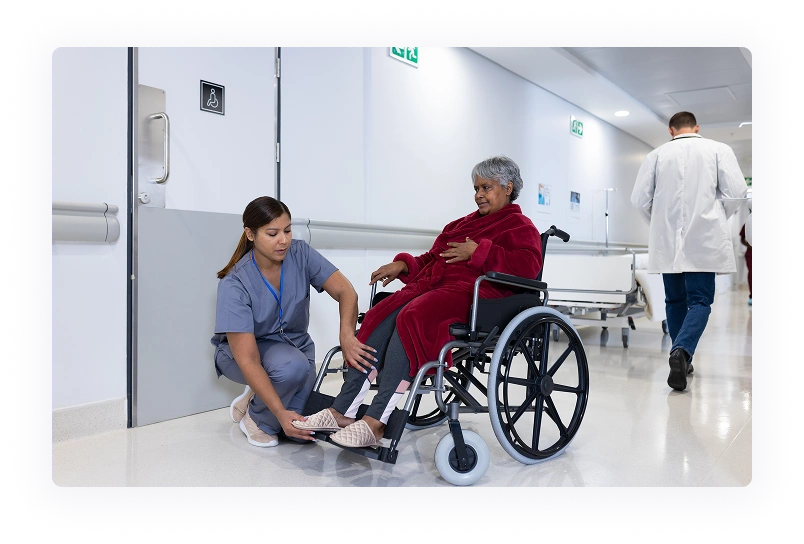
The attendant should accompany the patient to ensure enhanced patient safety. Patients are requested to use the call bell to reach the nurses for help and use safety features like handrails on the beds and footstools while getting up and down from the bed. Grab bars are provided in the restroom for aid, and safety belts in the stretchers and wheelchairs to ensure complete safety.
-
To respect his/her special preferences, spiritual and cultural needs -
To respect his/her personal dignity and privacy during examination, procedures, and treatment -
To get protection from neglect or abuse -
To maintain patient information confidentiality -
To refuse the proposed treatment -
To seek an additional opinion regarding clinical care -
To complain and information on how to voice a complaint -
To get information on the expected cost of the treatment -
To get information on the attending doctor's name, care plans, progress, and health care needs -
To obtain access to their clinical records -
To get information and education about their health needs. -
To obtain informed consent before blood and blood components transfusion, anaesthesia surgery, initiation of any research protocol, and any other invasive high-risk procedures/treatment.
-
To provide all personal and family health information needed to provide appropriate care, including reporting if you are in pain or require pain relief -
To participate to the best of your ability in making decisions about your medication and treatment and to comply with the agreed-upon treatment plan -
Politely question your physician or other care providers when you do not understand any information or instructions -
Inform your physician or other care providers if you desire to transfer to another physician, caregiver, or facility -
To be considerate of others receiving and providing care -
To comply with the facility policies and procedures, including smoking, noise, and not exceeding the number of visitors -
To accept financial responsibility for health care services and settle the bill promptly -
Taking responsibility for the safety of your valuables and personal belongings